How Basanti’s journey from helpless to hopeful reshaped my understanding of strength
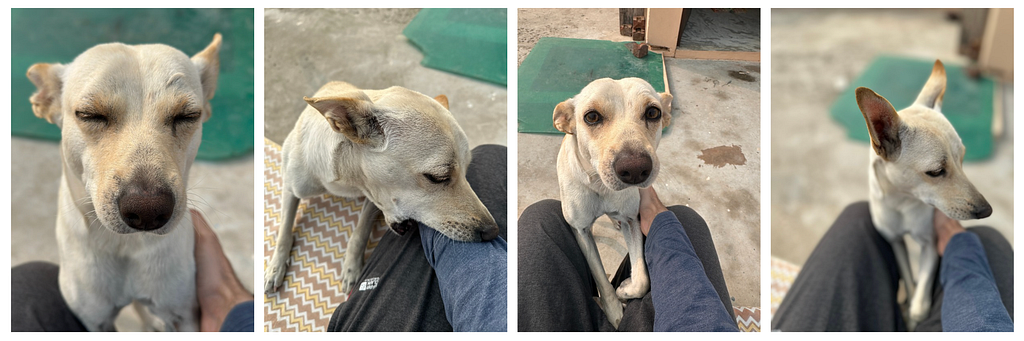
This is a continuation of Part 1 (The Day Basanti Found Me). Please read Part 1 first before continuing here.
https://medium.com/illumination/the-day-basanti-found-me-80b6a0f456b4
Since my mom wasn’t around and my dad used to come home late from work, it meant I had to take care of Basanti completely. One of my earliest missions? Teaching her how to bark. I tried everything — mimicking barks myself, encouraging her for days — but nothing worked. It started to feel ridiculous. What if she never learned to bark? The thought amused and frustrated me at the same time. I was her parent, after all — wasn’t it my job to teach her everything, even how to bark?
Determined, I even played videos of barking dogs, hoping she’d pick it up. But she barely paid attention. Then, one day, while we were playing, I teasingly irritated her just enough to trigger a reaction. Out of sheer annoyance, she let out her first bark. Surprised and thrilled, I urged her to do it again, but she refused. I repeated the trick, and once more, she barked. Excited, I grabbed my phone and recorded the moment — her very first lesson, successfully taught.
For the most part, I kept her on the rooftop to protect her from Parvovirus, a highly contagious disease that spreads among dogs and can be fatal for puppies. Puppies who haven’t been properly nursed by their mothers are especially vulnerable, and many don’t survive.
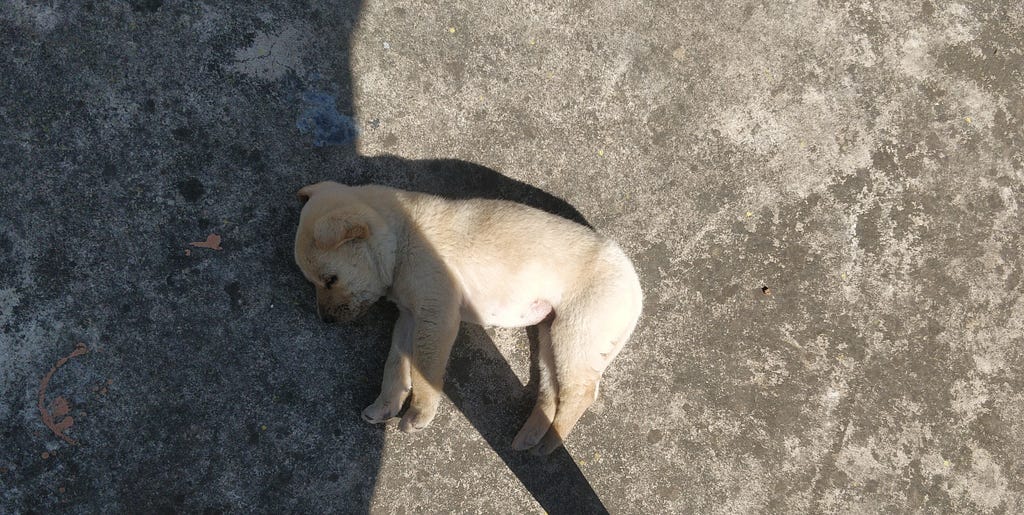
During the day, while I worked, I kept her on the rooftop, locking the door from the inside to prevent her from wandering down the stairs or accidentally falling. At night, I made her sleep in the storage room — a small, empty space — so that any mess she made could be easily cleaned up, sparing the rest of the house from her nighttime accidents. I even tried keeping her on the rooftop at night, bundled up in layers of woolen clothes.
One day, it was past midnight, I was working on some personal project when I heard the unmistakable sound of rain. My heart sank as I suddenly remembered — she was still outside. I rushed to the rooftop door, fumbling to unlock it. When I finally opened it, there she was — standing by the gate, soaked and shivering, patiently waiting for someone to let her in. My chest tightened with guilt. That night, I decided — no more leaving her on the roof overnight. During the day, I could at least hear the rain coming, but at night, she needed to be inside where it was safe and dry.
Keeping her in the storage room, however, turned out to be a challenge. She cried through the night, lonely in the dark, unable to see anyone. After a few nights of failed attempts, I came up with an idea — I placed her in a plastic tub filled with old, warm clothes and kept it near my bed. That way, she could see me, and more importantly, she wouldn’t be able to roam the house while I slept.
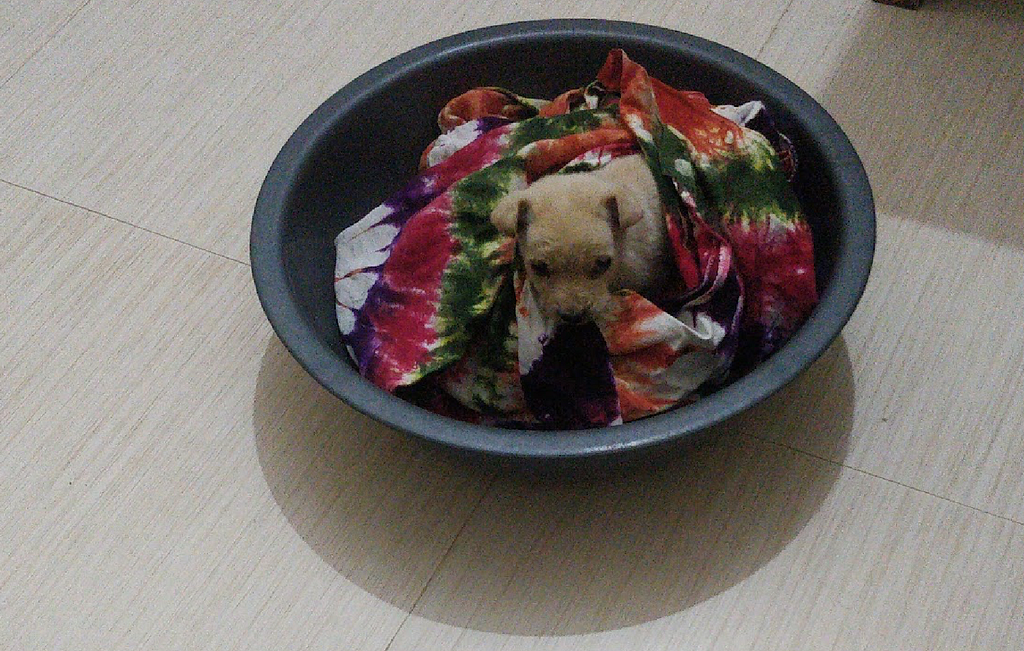
For a week or two, the tub was a lifesaver. But soon, she figured out how to escape — pressing against the tub’s edge until she tumbled out. After that, there were a few nights where I woke up to unexpected messes, cleaning the floor at odd hours. Parenthood, even in puppy form, was proving to be quite the experience. Daytime was usually peaceful for me. With the entire rooftop to herself, she had plenty of space to play.
One day, I worried that it might rain, and since there was no shelter up there, I decided to leave the rooftop gate open. I figured if it started pouring, she would instinctively come inside. I assumed she wouldn’t go near the stairs.
That day, my father was home, getting ready to leave. He stood at the bottom of the staircase, putting on his shoes. The top and bottom of the staircase were aligned in a straight vertical drop. I was outside as well, waiting to close the main gate after he left so I could return to work — I had a meeting about Databricks coming up.
As my father spoke to me, she must have heard our voices from upstairs. Curious, she made her way to the top of the staircase and leaned over the edge, trying to see us below. But she couldn’t keep her balance.
Right in front of my eyes, less than a meter away from me, she fell — a straight vertical drop from the rooftop onto the marble floor. For a split second, I couldn’t process it. It was such a small thing that had just plummeted down — I told myself it wasn’t her, that maybe it was something else. But when I looked down, she was lying there, motionless.
I froze. My mind went blank.
My father snapped at me, scolding me for leaving the rooftop gate open. Then he told me to pour cold water on her. Snapping out of my shock, I rushed over and picked her up. She wasn’t moving. Her eyes were wide open but lifeless. My heart sank. She’s dead, I thought.
Desperately, I carried her to the tap, letting cold water run over her, rubbing her tiny back, whispering prayers under my breath. Still, no response. Minutes passed, and then — finally — a sound.
A sharp, piercing cry.
She cried uncontrollably, and I found myself crying too — tears of fear, relief, and guilt all at once. She was alive. I kept whispering to her, trying to calm her, stroking her gently. But she wouldn’t stop crying.
Thinking I might be hurting her by the way I was holding her, I placed her on the floor. That’s when I saw it — her entire rear area was broken. She couldn’t stand. Every little movement sent waves of pain through her tiny body.
Panicked, I ran to the kitchen and grabbed some lassi, hoping it might soothe her. But she refused to drink. Slowly, her cries weakened, and she fell silent.
I gently lifted her, cradling her as carefully as I could, and placed her in the tub filled with warm clothes. She looked at me — her eyes filled with pain, confusion, and trust. I sat beside her, watching her drift into sleep, and inside, I was breaking.
This was my fault. She had fallen because of me. And now, all I could do was sit there, helpless, cursing myself, praying she would be okay.
We decided not to put a Plaster of Paris cast on her since it’s not advisable for small puppies. She couldn’t walk — only drag her tiny body across the floor whenever she wanted to move. I took care of her as best as I could, reassuring her that she could make a mess anywhere, and I would clean it up without complaint.
At first, I tried lifting her back legs, hoping to encourage movement, but her rear limbs remained unresponsive. Week after week, I supported her, gently pulling her forward and helping her take steps. There was progress, but only when I held her torso to assist her.
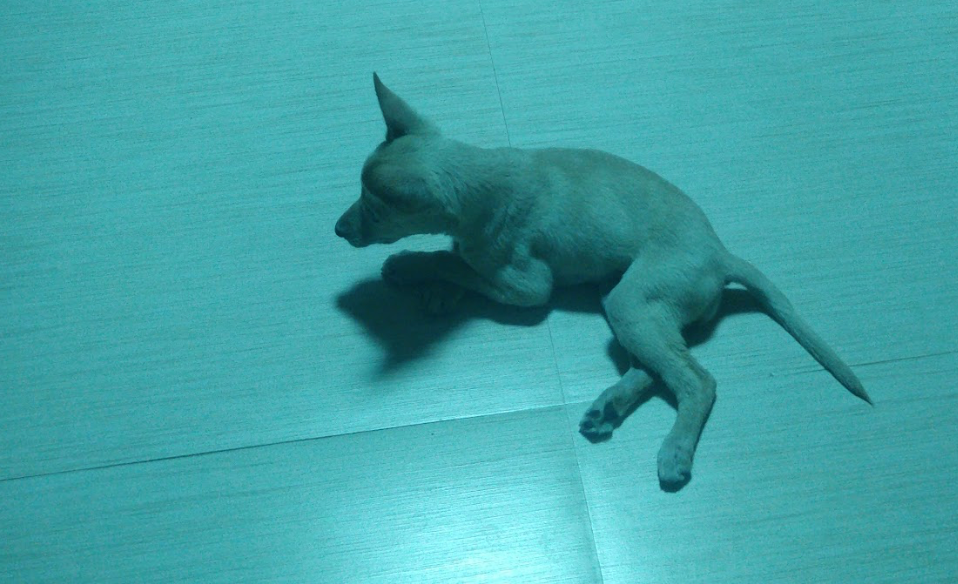
After five or six weeks, she managed to stand on all four legs for the first time. She didn’t move an inch, but even that was a victory. I didn’t lose hope — I was determined to help her walk again. But for the next few weeks, there was no further improvement. She would just stare at me whenever I encouraged her to take a step.
That’s when I thought about building a DIY wheelchair for her. I watched YouTube tutorials, took her measurements, and planned to add wheels that would allow her to push forward using her front legs. Meanwhile, I kept trying to help her walk manually.
Then, one day, something changed. She took a step forward — just one — and fell. But then she stood up, took another step, and fell again. I was stunned. Why now? Maybe she had seen a dog running in the street and wanted to do the same.
That week, she made tremendous progress. She managed to move two to three feet before falling. Every time she tumbled, my heart ached for her, but she never gave up. She would get right back up and try again. I started measuring how far she could go, cheering her on whenever she beat her previous best. She was relentless — falling hundreds of times but always standing up again.
Then, after another week, she could walk without falling. Her movements weren’t perfect — she still dragged her rear legs slightly — but she was walking. And that was everything.
One day, I left her on the rooftop and went back to work. When I returned to check on her, I was met with a sight I couldn’t believe — she was running.
She ran across the roof, fell, got up, and ran again. She was so happy, as if she was showing off her newfound ability. I laughed, watching in awe. Have you been practicing running up here while I was downstairs working? I asked her. That day, my heart was full. I picked her up, tossed her gently in the air, and hugged her tightly as she bite my ear — a habit she still hasn’t outgrown.
After nearly three months, she could walk and even run despite her damaged legs. The only thing she couldn’t do was climb stairs. Each time she tried to step onto the first slab, she would struggle because the weight shifted to her rear legs. No matter how hard she tried, she couldn’t lift herself up.
So, whenever she wanted to go to the rooftop, I carried her. And honestly, I didn’t mind at all.
She grew up, but her body size never quite caught up. Maybe it was because she missed out on the usual puppy activities — running, jumping, playing — while recovering from her accident. Instead of growing strong, she spent her early months confined to a bed, healing.
But what she lacked in size, she made up for in spirit.
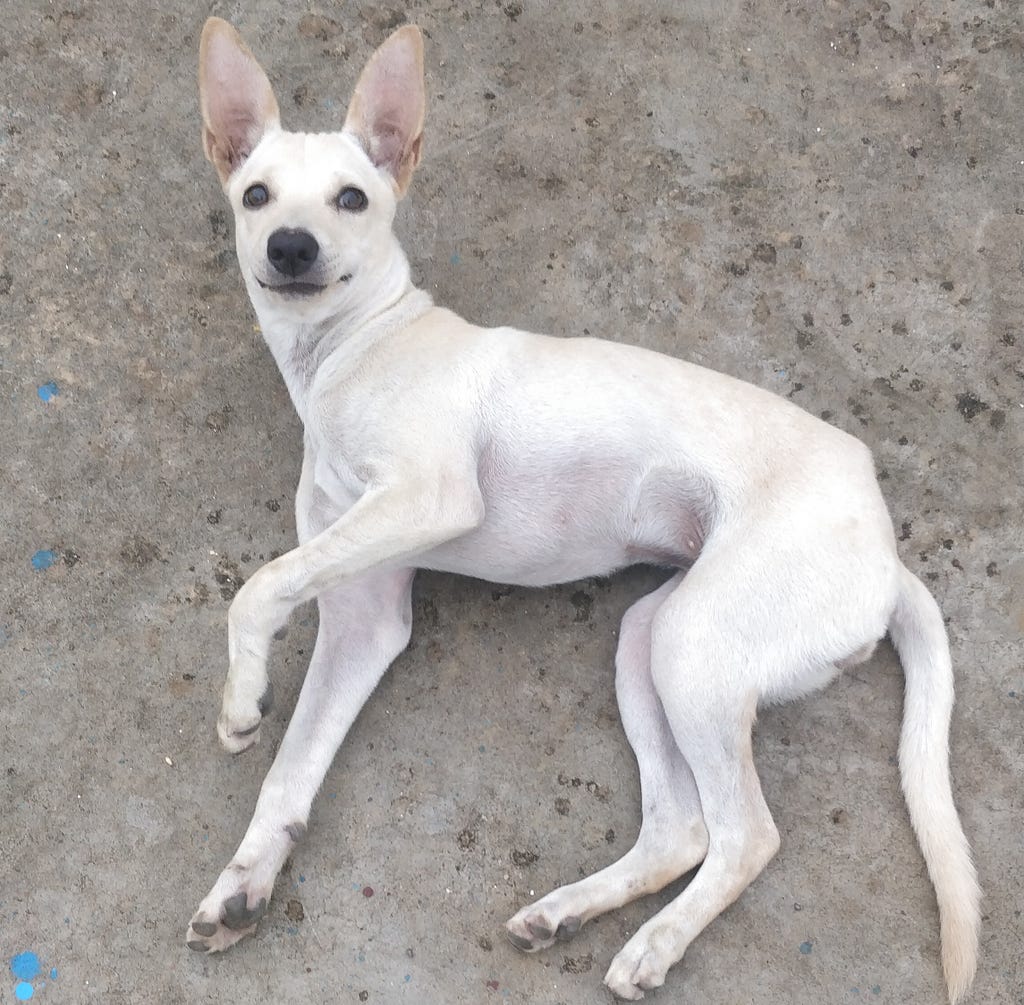
She became fiercely independent, almost wild in nature. Except for me, my brother, my mom, and my dad, no one else could hold her — anyone who tried would get bitten. Whenever she managed to slip out of the house, chaos erupted in the neighborhood. Kids would start yelling, “Basanti is here! Run, run!” Catching her was an impossible task — she turned it into a game, running away every time we got close.
I never had the chance to properly train her when she was young, and now, she refuses to obey commands. She understands me — there’s no doubt about that — but she simply chooses not to listen. She’s fearless to a fault. When she was just six months old, she killed a snake. Another time, I caught her in the middle of a fight with one. Nothing scares her, as if she believes she’s already faced the worst.
Then, just two weeks before I was set to leave for the U.S. in August 2022, she fell ill. It was Parvovirus.
The bloody diarrhea, the weakness — it terrified me. Since she hadn’t been breastfed as a pup, her immunity was weak, making her vulnerable to infections. I was scared, feeling the same helplessness I had when she fell from the roof. For two to three days, I cried watching her struggle. Every time she saw me crying, she would drag herself closer, sniff me, and lick me— as if telling me, I’ll be okay. That only made me cry harder.
But, like always, she fought through it. She recovered, slowly regaining her strength. Seeing her bounce back was the only reassurance I needed before boarding my flight.
On the day of my departure, she knew. The sight of my suitcase was enough for her to understand that I was leaving. We locked the main gate to prevent her from chasing after me. The car was parked far from the house, out of her sight. But she was determined.
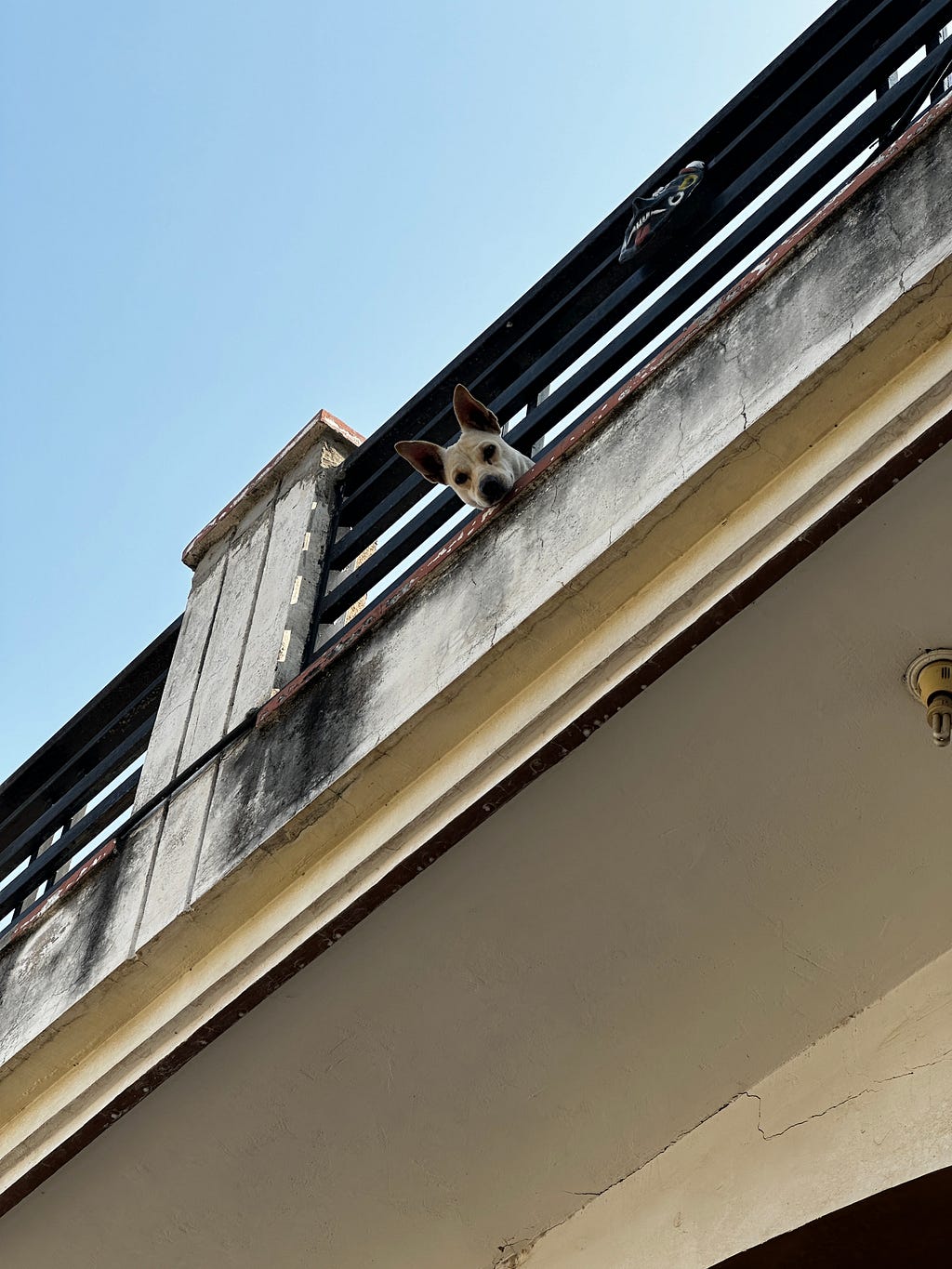
For the first time ever, she climbed the stairs to the rooftop — something she had never managed to do before. She stood there, looking down at us as we packed the car, her eyes fixed on me. She had done the impossible just to catch a final glimpse.
Back to the present.
Her rear legs never fully recovered. To this day, she drags them slightly while walking and running. She still stumbles, still falls — but she never stays down. Every time she hits the ground, she gets right back up and keeps going. Her legs are constantly scratched, covered in small wounds, but it doesn’t slow her down.
Somehow, despite her physical challenges, she’s swift — almost predatory. She has injured a pigeon, killed multiple lizards and chameleons, and even taken down a few squirrels. I have no idea where she gets those hunting instincts.
Now, while I’m in the U.S., my mom takes care of her. And, to be honest, my mom loves her more than she loves me. They fight like an old married couple — my mom chasing after her, scolding her, while Basanti pretends not to care. Every day, I call home twice, and every time, my mom has a new story about her — some new mischief, some new way she drove everyone crazy.
I miss Basanti every single day. But knowing she’s happy, safe, and keeping my mom on her toes makes it easier.
I can’t wait to see her again this year.